The top 8 · archive
Every top 8 this site has run
A list that is not up today is not trimmed or summarised here - it is the list exactly as it was on show. The one on show now is at the top 8.
Part one · the top 8
Top 8 parasocial moments in Saturday morning cartoons of the 1990s
Every one of these is a one-sided relationship with a person who does not exist, aimed at a child, on a Saturday, before anybody had a word for it. Ranked by how well it worked.
This is the section nobody argues about, because it started before anyone had an argument. A child watching a cartoon is doing the same thing a forty-year-old watching a stream is doing, and the only difference is that nobody had decided yet whether it counted.
LAW 6 Every entry here is an instance of Characters move in, which is the reason they are on one list.
-
1

A roller coaster with green tubular supports and a yellow track, a train of riders cresting a hill above a sign reading DRIVE IN, NOW SHOWING RUNAWAY. · Chris Hagerman · CC BY-SA 3.0 What happens. Tommy writes to a magazine telling them the NEST was real. The NEST never appears. The letter is never answered. Chuckie and Tommy argue about it and then forget about it and then the episode ends.
Why it is on the list. The single most parasocial thing ever put on television, and it is a joke about wanting the writers to confirm that a fictional place is real. An eight-year-old asking to be told the world is real, dressed up as a joke about a brand of baby food. Everything on this site happens because a child did not accept the terms of the arrangement.
-
2
What happens. Sherman Grant is twelve and has a junior detective kit. When Batman is hit with nerve gas and collapses into the Batmobile, Sherman and Roberta drive him home, lay him on a couch in the basement, and set up a crime lab around him. Roberta wants to call the police. Sherman refuses: a detective has to protect the identity of his client, especially when it is this client. The Penguin comes to the house. The kids hold him off with the contents of Batman's utility belt until Batman wakes up.
Why it is on the list. The relationship is entirely Sherman's invention. Batman cannot consent, cannot answer, and spends most of the episode unconscious; the child supplies the client, the duty, and the confidentiality. This is the list's arrangement at its most literal: the hero is in the room, and the child builds a professional ethics around a body that cannot say yes. The audience is doing the same thing from the couch. Batman wakes up, solves the plot, and leaves; the boy keeps the story.
-
3
What happens. The host asks the child at home a question, straight into the camera, and then waits through a silence written into the script before behaving as though an answer arrived. The pause is not dead air. The show was built out of it.
Why it is on the list. A 1997 New York Times piece recorded a mother muddled that her small son had begun answering the television, and the period's research found children engaging more the more they rewatched. The show aimed second-person grammar at children young enough not to know a machine was doing it, and the question it put in the pause was four words long: 'Will you help me?' That is the whole transaction - attachment made by a gap left open long enough for a three-year-old to step into it.
-
4
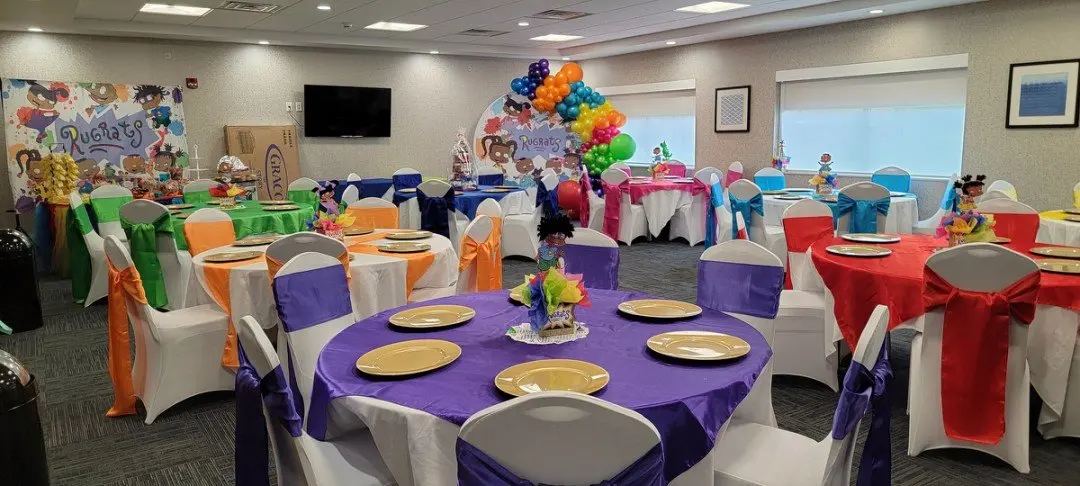
Rugrat Baby Shower Decor · Sherlene · CC BY 2.0 What happens. The premise of the entire show, which is four toddlers exploring a house while believing they are the size of insects. And they are. The house is as big as a city to them.
Why it is on the list. Rugrats is a parasocial engine pointed at children who could not yet identify the trick. The scale is the relationship: the world is enormous, you are small, and there is always one adult-shaped thing that will explain it. That is the whole emotional structure of the show and most people still have it.
-
5
What happens. The show opened and closed on a live-action kid at a computer, seen from behind, playing a Carmen Sandiego game. The cartoon was the game. Carmen talked to the player - not to Zack and Ivy, but to the person at the keyboard - and the player sent the detectives to the next location. The show never showed the player's face, because the face was yours.
Why it is on the list. The frame is a machine for making the viewer complicit. The child at home is not watching a cartoon about detectives; the child is the player, and Carmen is the voice coming out of the game. The live-action back of a head is the only body the show gives you, and it is enough. Every episode ends with the player still at the keyboard and Carmen still out there, which is the exact shape of the relationship.
-
6
What happens. At the end of every dubbed episode the Scouts stepped out of the story and spoke to the viewer directly - thirty seconds about friendship, homework or courage, tied to whatever the episode had just done, in new lines recorded over the existing footage. The person who had just saved the world stayed behind to talk to you.
Why it is on the list. It was not an artistic flourish: the segment was added to the English dub to satisfy the educational-content requirements of the Children's Television Act. The machinery of children's television produced a character looking straight at a child and giving advice, in character, because a law asked for teaching - and the thing it taught with was the bond itself, which needed no writing at all.
-
7
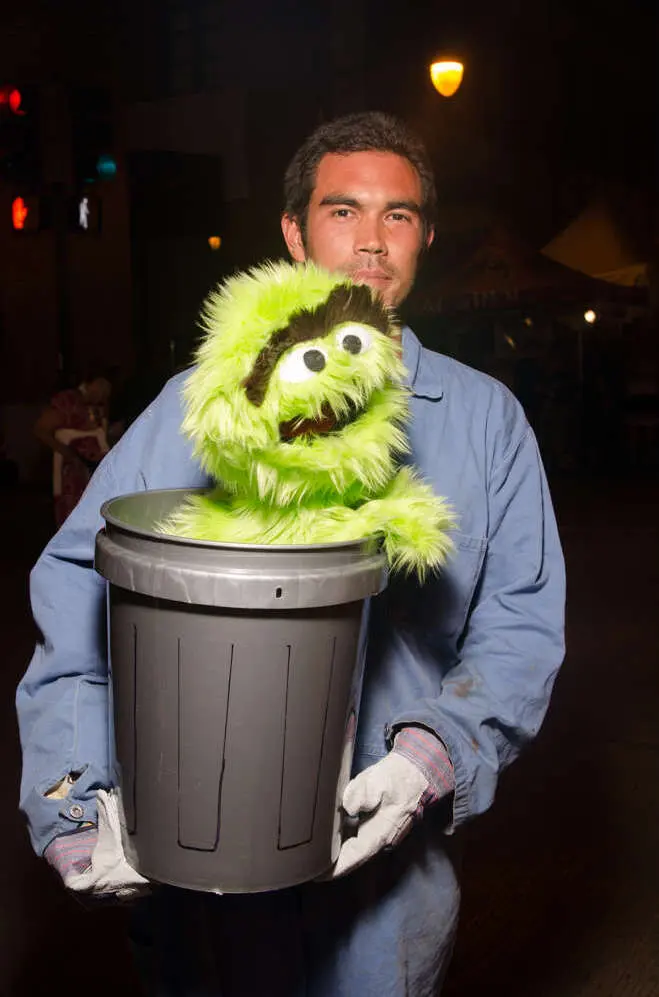
A cosplayer as Oscar the Grouch, Hallowbaloo 2012. · Kyle Nishioka · CC BY 2.0 What happens. Oscar the Grouch refused to perform in a fundraiser telethon and was written out of the special for a season. He came back. Millions of children wrote in about it.
Why it is on the list. The cleanest case in television of a fictional character having genuine leverage over the people who own him. Sesame Street is parasocial infrastructure - a generation of people grew up with these characters and still argues about them as if they are relatives - and the grouch episode is that infrastructure noticing it had power.
-
8
What happens. ReBoot was set inside a computer. The city of Mainframe was full of sprites and binomes who knew that their world was run by a being called the User, who lived outside the Net and dropped games on them for pleasure. The User never appeared. The User was the person at the computer, which is to say the viewer. The opening narration said no one knew for sure what the User wanted, but Bob intended to find out.
Why it is on the list. The show made the audience the absent god of a whole civilization. The sprites fear the User's games and argue about whether the User is one being or many; the User is never in the room, and the User is the child on the couch. It is the most literal version of the list's arrangement: a world of characters who exist only while you are watching, and a relationship you cannot reciprocate because you are the one holding the controller.
-
9
What happens. Before the commercial break the show put one of its creatures on screen as a silhouette and asked the audience to name it. The answer came after the adverts. Children shouted at the television anyway, because the question was addressed to them and the pause was real.
Why it is on the list. The withholding is the design. The show borrows the child's knowledge against the clock, and the screen is a surface that cannot hear - which is this list's whole arrangement, delivered in the gap between two adverts. The shouting is the audience enthusiastically holding up its end of a conversation the other side never scheduled.
-
10
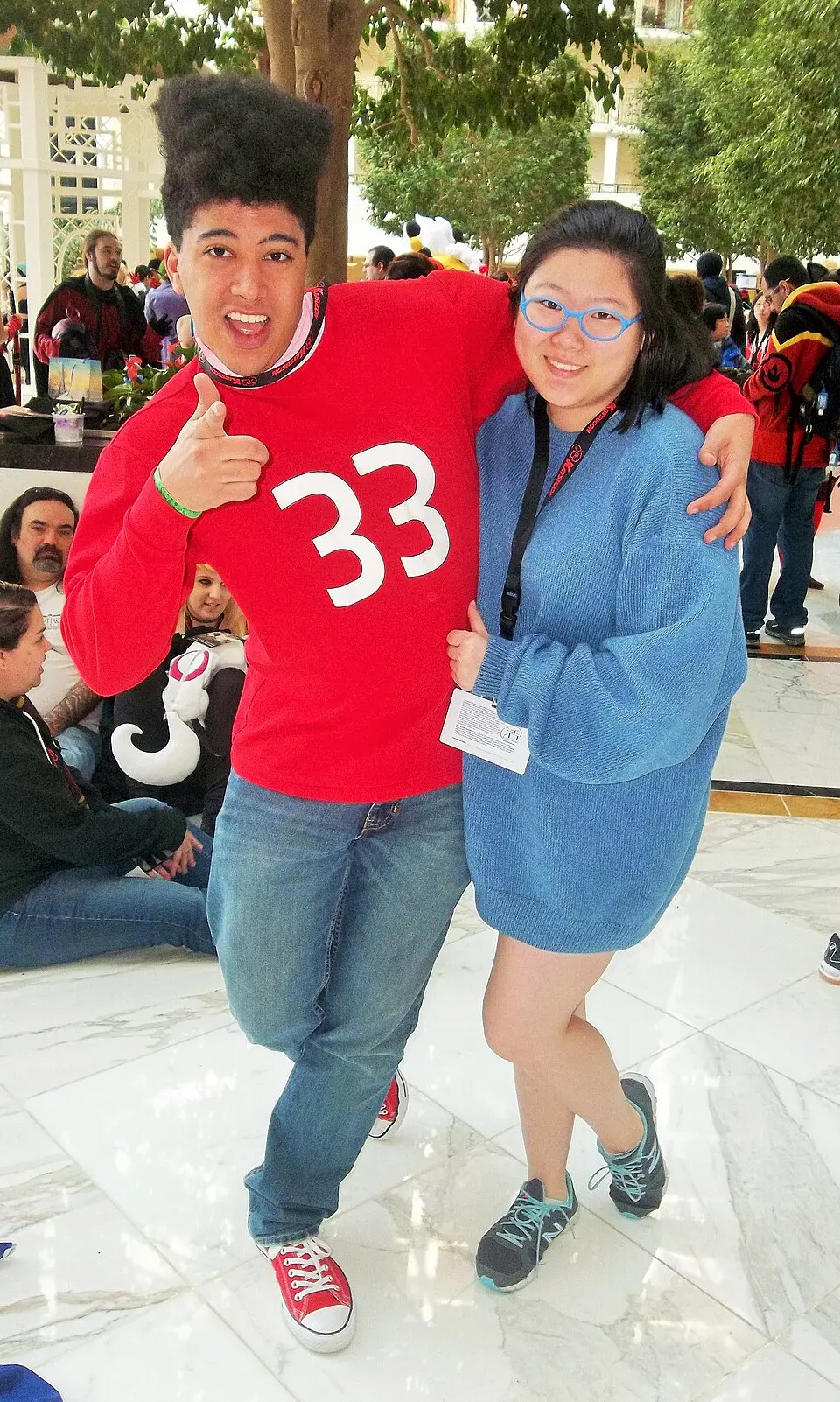
Two cosplayers as Gerald and Phoebe from Hey Arnold!, in a convention hall at Katsucon 2015. · peyj_turner · CC BY-SA 2.0 What happens. A greet-the-world catchphrase, delivered out loud, several times an episode, to rooms full of people who are not the person it is addressed to. It is a hello with no possibility of an answer, and it is the premise of the show rather than a joke inside it.
Why it is on the list. It is the purest arrangement of the thing this whole site is about, and it is aimed at a child. Every other entry here has someone on one side of the relationship; this one has a child offering something to a room. Nobody ever responds, nothing is even meant to, and the greeting keeps being delivered anyway - which is not a parody of parasocial attachment, it is a working description of it, written for six-year-olds and never once signalled.
-
11
What happens. The show ended most episodes with a segment called Producer Says. The producer, voiced by Malcolm-Jamal Warner, answered a ringing phone and took a call from a viewer who had just watched the episode. The viewer pointed out what the cartoon got wrong: the volcano took thousands of years, the class could not have survived that, the bus could not do that. The producer agreed, blamed the half-hour slot, and thanked them for watching closely. Then the next episode did it again.
Why it is on the list. The show built a reply into its own format. The viewer is not asked to write in and wait; the phone rings before the credits, and the show's own producer concedes the fiction's errors to a child's voice. It is a rare case of a children's show treating the audience as a fact-checker and a participant at the same time. The concession is the relationship: the show says it knows you were watching closely, and it would rather admit the lie than lose you.
-
12
The hedgehog told you how to cross the street
Adventures of Sonic the Hedgehog, 1993
LAW 6 · Characters move inWhat happens. A short segment closed every episode: Sonic and Tails turn out of the fiction and give the child watching a piece of advice - seatbelts, smoking, sexual harassment - in character, straight at the viewer. The rescue ends and the character instructs.
Why it is on the list. It was added under the Children's Television Act's educational rules, which is the honest frame: a law asked children's television to teach something, and what got built was the character you already loved, addressing you in second person at the end of the show. The educational content was the relationship, formalised.
-
13
What happens. Emperor Kukulkan is a fictional dragon who can only be summoned by a child who believes in him. Every child who believed in him could summon him.
Why it is on the list. The premise is a description of parasocial attachment stated as a children's cartoon premise, and nobody at the time clocked it as one. Believing in something fictional is the mechanism. The show built an entire children's programme on it and treated it as unremarkable, which is exactly why it worked.
-
14
What happens. KaBlam! was an anthology of short cartoons, and between the shorts it was a comic book. Henry and June lived in its pages, turned them to introduce the next cartoon, and treated the whole show as a publication you were holding. The announcer called it a place where cartoons and comics collide and introduced the two of them as your hosts. They were not characters in the shorts. They were the frame, and the frame had a personality.
Why it is on the list. The anthology had no continuing story, so the relationship was the frame: two voices who were always there between the cartoons, in a book you were holding. Henry and June were not your friends; they were the printed hosts of a printed object, and the show made no distinction between reading and watching. The bond was with the binding. That is a strange thing for a television show to ask a child to do, and KaBlam! asked it every week.
-
15
What happens. A hero who exists only when five children combine their rings and summon him - and at the end of the episode he turns to the audience, hands the power over and leaves. 'The power is yours!' is his farewell line.
Why it is on the list. The fiction redistributes itself to the viewer as its final act. Every other entry here asks a child to believe in something; this one ends by telling the child the belief was the power all along, which is parasocial attachment stated as environmental policy and repeated weekly until it became a catchphrase.
-
16

The Power Rangers cast on a Camp Conival panel at Comic-Con, beneath banners for Alpha and Omega · iDominick · CC BY-SA 2.0 What happens. Five teenagers in spandex, and the entire premise is that a group of people with no special qualities are chosen by a machine to fight monsters. Then the actors leave and new teenagers take the costumes and the audience carries over completely.
Why it is on the list. The parasocial breach in full public view. Millions of children watched actors be replaced and transferred every piece of feeling they had for the character straight to whoever put the suit on. It was the most visible handover of an attachment ever broadcast, running five days a week, and it is the closest thing television has to a controlled experiment.
-
17
What happens. Between cartoons on summer afternoons, Nickelodeon ran a block hosted by a popsicle stick. Stick Stickly had googly eyes, a jelly bean nose, and a PO box. He read viewer mail on the air, interviewed children, and sang his address so you could write to him: PO Box 963, New York City, New York State, 10108. In U-Dip, viewers voted on which substance to dip him in. In U-Pick, viewers voted on which cartoon to show.
Why it is on the list. The host was a craft project with a face, and the host's whole job was the viewer's letter. He gave out a real PO box, sang it as a jingle, and made the address a thing children memorized. The relationship was not with a character in a story; it was with a stick who promised that if you wrote, he would read it. The stick was the reply.
-
18
The turtles left the screen and played the concert
Teenage Mutant Ninja Turtles, 1990
LAW 6 · Characters move inWhat happens. In the fall of 1990 the four cartoon turtles went on a live arena tour, 'Coming Out of Their Shells' - a run of about forty cities that opened at Radio City Music Hall. Pizza Hut sponsored it, the opening night went out on pay-per-view, and the show's own spokesperson told a reporter: 'They are not actors dressed in costumes. They are the Ninja Turtles, and they've learned to play rock & roll.'
Why it is on the list. The official position was that nobody was in a suit. Children watched four drawings walk onto a stage and the people behind the show stood behind the sentence that the drawings were the performers, because letting the costume be visible would have broken the only thing being sold. The characters moved in so completely that the staff had to deny the bodies underneath to keep them real.
-
19
What happens. Phil Funutmarsh sits in a dark room in front of the television and is, for a few seconds per episode, allowed to be a person who is merely a father.
Why it is on the list. The show understood that the audience's relationship was not only with Doug. It built the person holding the remote into the fiction, gave him two lines a week, and let a generation of children feel oddly seen by a background character. The parasocial relationship with the dad is the one nobody has ever written about and it was aimed at children.
-
20
What happens. Buster and Babs open the viewer mail on screen. One letter is from a little girl in the hospital who says she is very sick and asks if Fifi La Fume can visit. Fifi cries and agrees to go. The girl is Elmyra Duff, whose running joke is wanting to keep Fifi as a pet; the letter was bait. The show stages the fan letter as a con and lets the character's sympathy be real.
Why it is on the list. The letter is the whole arrangement in one envelope: a stranger claims a need, the character responds with real feeling, and the need turns out to be a trap. The show is not making fun of sick children. It is making fun of the viewer who has learned that a character will come if you write the right sentence. Fifi's tears are the far end's reply, and they are spent on a lie. The scary part is that the lie works because the character is exactly as kind as the fiction promised.
-
21
What happens. In the fall of 1994, mid-series and five days a week, three of the five original rangers left the show and three new teenagers took the powers on screen in a ceremony. The audience watched everything attached to the old faces move to faces it had never seen, and kept watching.
Why it is on the list. The most visible handover of an attachment ever broadcast. Millions of children transferred the feeling they had for Jason, Zack and Trini to Rocky, Adam and Aisha essentially on schedule, without being asked, and nobody pretended otherwise. Five days a week, in front of the same children, for years - which is the closest television has come to a controlled experiment on whether the attachment was ever to the person. It was to whoever was inside the suit.
-
22
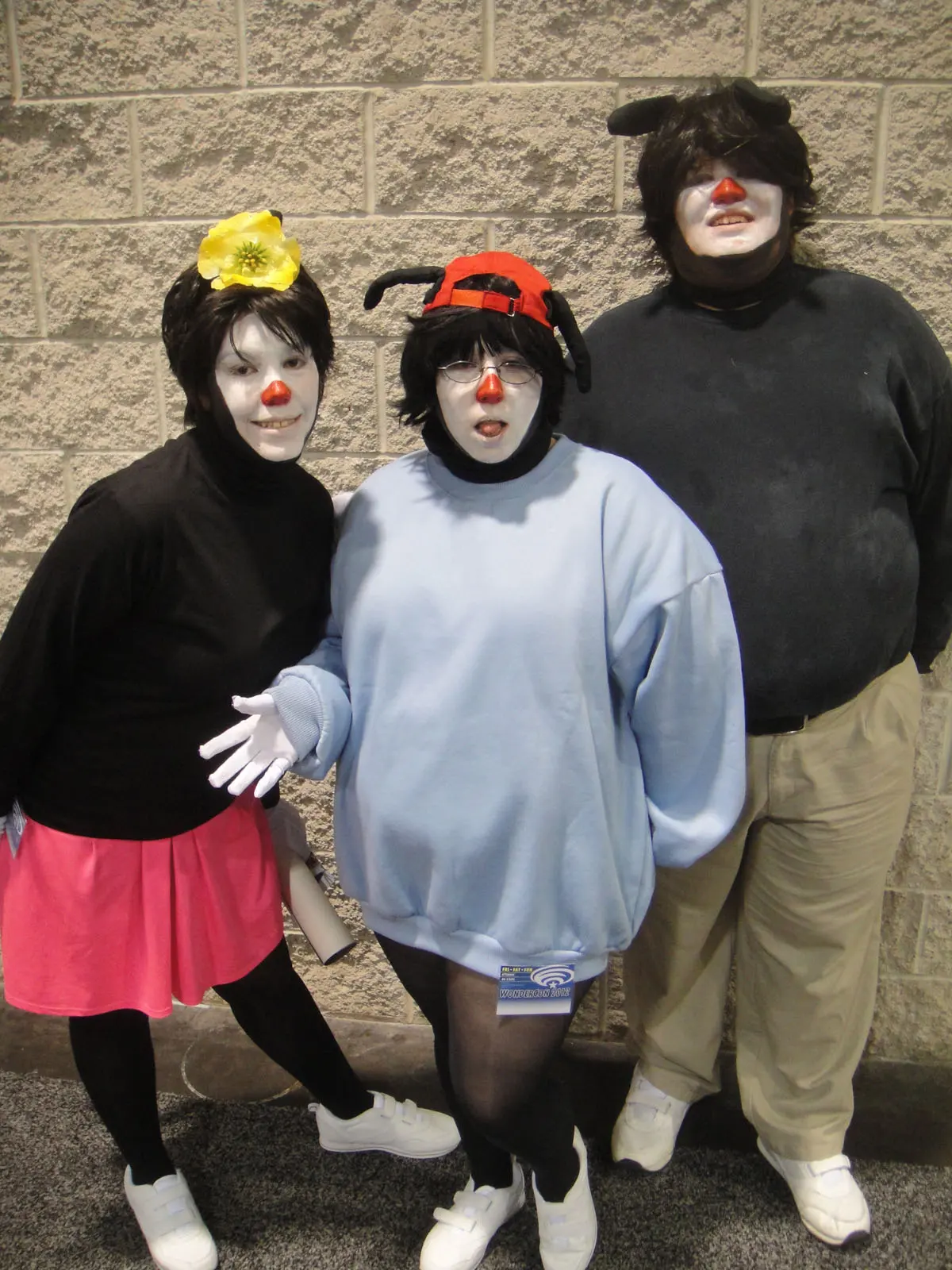
The Animaniacs at WonderCon, 2012 · The Conmunity - Pop Culture Geek from Los Angeles, CA, USA · CC BY 2.0 What happens. A whole generation of children said a specific sentence in a specific order with a specific pause in it, for a cartoon rabbit, on Saturday morning.
Why it is on the list. It is last because it is the least about plot and the most about the medium. The line was never written to be repeated. It was a delivery, and an entire cohort of children reproduced it, in unison, years later, without being asked. That is not attachment to a character. That is attachment to a voice, and it is the purest parasocial event in the list.
-
23
What happens. Fanboy is a teenager in a comic book store who decides that his life's purpose is to become Freakazoid's sidekick. Freakazoid, still mourning his last sidekick, does not want him. Fanboy follows him through an initiation, a fight, and a comic book convention. Freakazoid finally gets rid of him by introducing him to Mark Hamill, who is at the convention as himself. Fanboy is delighted. When Freakazoid asks if he really has no life, Fanboy says no, sir, proudly.
Why it is on the list. The fan has learned the contract better than the hero: if you want the character to notice you, you have to get close enough to be a sidekick. The show answers with the thing the contract cannot survive - the hero says no, then hands the fan to a real person. Mark Hamill is the joke and the escape hatch: the fan wanted a fictional friend, and the show gives him a real celebrity who is at the convention as himself. The fan is happy anyway, which is the most honest part.
-
24
What happens. A plush Elmo that giggled and shook when squeezed, sold for about twenty-five dollars in the Christmas season of 1996. Then it ran out: stores sold out as the trucks unloaded, resellers got hundreds for one doll, a Denver charity auction sold an Elmo for $10,000, and parents lined up by the hundreds for a shelf that was already empty.
Why it is on the list. Here the character could be touched, and it responded to being touched. Every relationship on this site runs one way, and here was a plush object in the house that laughed when you reached for it - not an answer, but the shape of one, in the room. The frenzy was not about a toy. A character who had spent years talking to children from inside a screen could suddenly be held, and the supply could not cover the feeling.
The lists here are kept exactly as they shipped. Back to the ten sections →